Civil Registration System
Bolivia

Coordination and Technology
Data Sharing
Does the law require that the civil registration authority share data with the agency responsible for producing vital statistics, on a regular and timely basis?
Recommended Practice based on International Guidelines
The civil registration agency must submit statistical information collected during registration to the national statistics authority in order for the agency to compile and publish vital statistics. The law should therefore require and enable the regular and timely sharing of data needed for statistical purposes between the civil registration and statistics agency or agencies.Bolivia Legal Analysis
Analysis of the legal instruments available to the reviewer did not identify any provisions relevant to this question.
Law Source
Computerization
Does the law block the use of technology, such as electronic collection, transmission and storage of data, within the civil registration system?
Recommended Practice based on International Guidelines
The use of computers, tablets and other electronic devices should be permitted for the collection of data for vital events, and it should be permitted for these data to be transmitted between government agencies and officials with the use of mobile technology or the Internet. Some older laws block the use of technology by requiring manual forms or processes,. Laws should enable technology. However, laws be technology neutral and not specify the method and mode of collection, transmission and storage of data in any civil registration system, as this may prevent system upgrades overtime.Bolivia Legal Analysis
No. Bolivian law does not prohibit the use of technology for the electronic collection, transmission, or storage of civil registration data, nor does it prescribe a specific technological format.
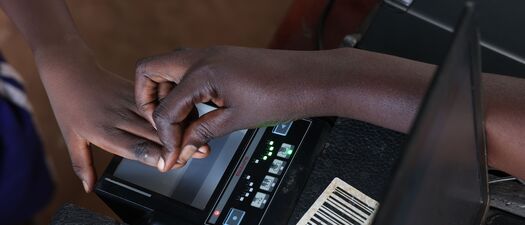
The Supreme Decree No. 24247 of March 7, 1999, Articles 78 - 82 crreate sthe conditions to digitalize and centralize its civil registration system through the Servicio de Registro Cívico (SERECI). The SERECI operates a biometric system covering births, marriages, divorces, deaths, and nationality recognitions. The system aims to ensure the reliability, authenticity, and timeliness of registry data.
Bolivia has also introduced an electronic registration system for live births in hospitals, which automatically assigns a unique identification number used to obtain the official birth certificate and national ID. However, this process currently applies only to hospital births, not those in rural or home settings.