Your guide to legislative frameworks for Civil Registration and Vital Statistics
A strong legal framework is essential for a well-functioning Civil Registration and Vital Statistics (CRVS) system.
CRVSlaws.org provides easy access to countries’ CRVS laws, alongside detailed legal analysis based on international practice and United Nations’ guidance and standards.
The Database also contains Country Factsheets that offer a quick overview of a country's legal framework and are available to download.
We focus on three thematic areas that cut across six key topics, allowing you to view comparative country practice for these three cross-cutting themes.
Responsive Image
Medicolegal Death Investigations
Medicolegal Death Investigation (MLDI) is the systematic, interdisciplinary process of determining the cause, manner, and circumstances of an unexplained, sudden, or unnatural death. MLDI raises issues of who certifies causes of death and how such data is recorded in CRVS systems.
Responsive Image
Role of the Health Sector
Health providers play a critical role in the civil registration system, acting as informants or notifiers of the occurrence of births, stillbirths, and deaths that occur in health facilities or under the care of a medical professional.
Responsive Image
Women’s & Children’s Rights
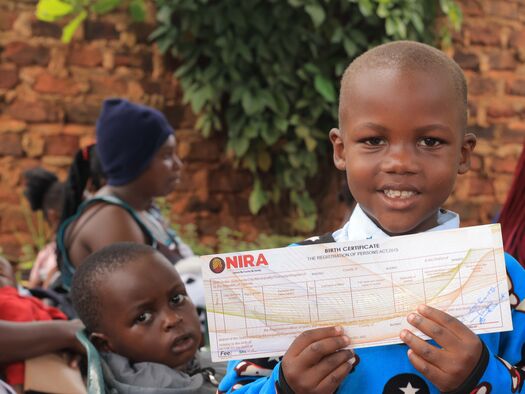
Legal identity documentation through birth and death registration enables women and children's access to education, healthcare, financial services, ownership of property and economic participation. Such documentation also protects them from exploitation, including through forced or early marriages.
When everyone is counted, every one counts
Responsive Image
Our Purpose
CRVS Laws is a legal analysis tool that helps countries understand and evaluate laws governing their Civil Registration and Vital Statistics systems across 100+ metrics and 250+ laws from countries around the world. It serves as a resource for legal drafting, policy implementation, comparative research, and identifying gaps relative to UN standards for drafting strong CRVS legal frameworks. In the case of gaps in laws and internationally recommended standards, we support countries with legal reform.
Our database is built on legal reviews conducted in over 30 countries, using a standardized toolkit of more than 100 individual legal questions spanning six topics and three cross-cutting themes. Reviews are carried out by GHAI D4H lawyers working alongside in-country legal experts to ensure accurate, context-specific interpretation of each nation's legislative framework. Reviewers examine all publicly available CRVS legal instruments — from primary legislation to circulars and case law — and assess them against the UN Guidelines on Legislative Frameworks for CRVS Systems, WHO ICD-11, and other international standards.